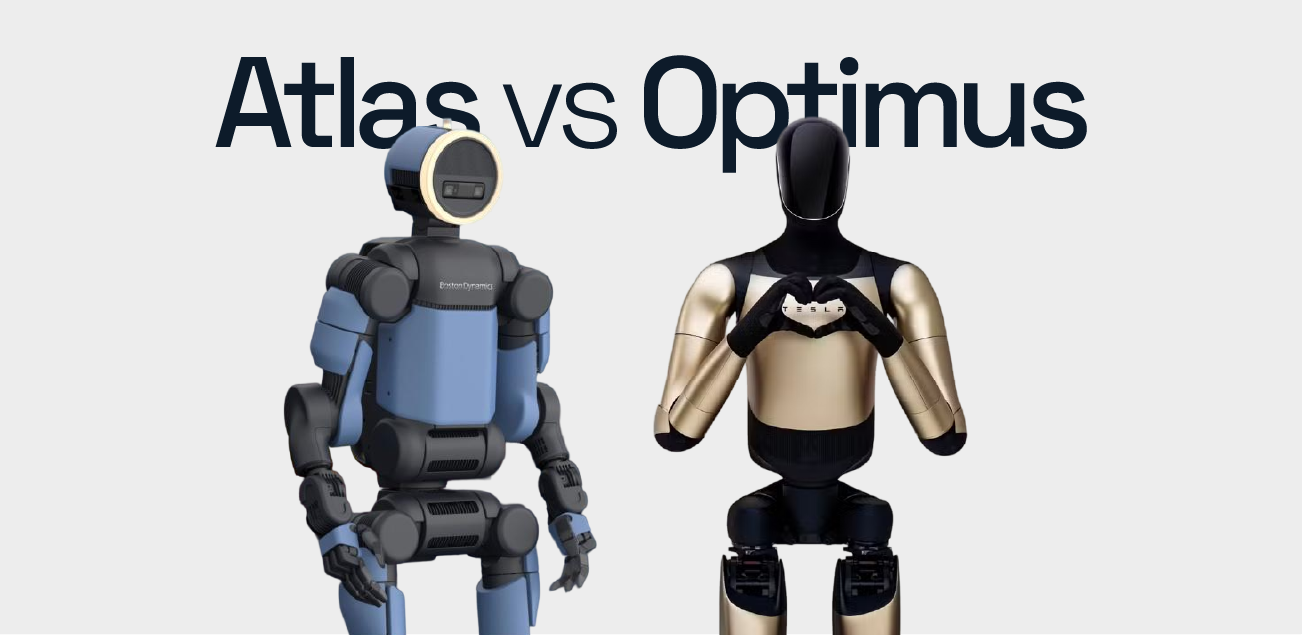
Tesla Optimus and Boston Dynamics Atlas are the two names that dominate humanoid robotics coverage in 2026. They represent fundamentally different approaches to the same problem: building a robot that can operate in human environments and perform useful industrial work. This comparison breaks down where each actually stands in 2026, not where their marketing says they are.
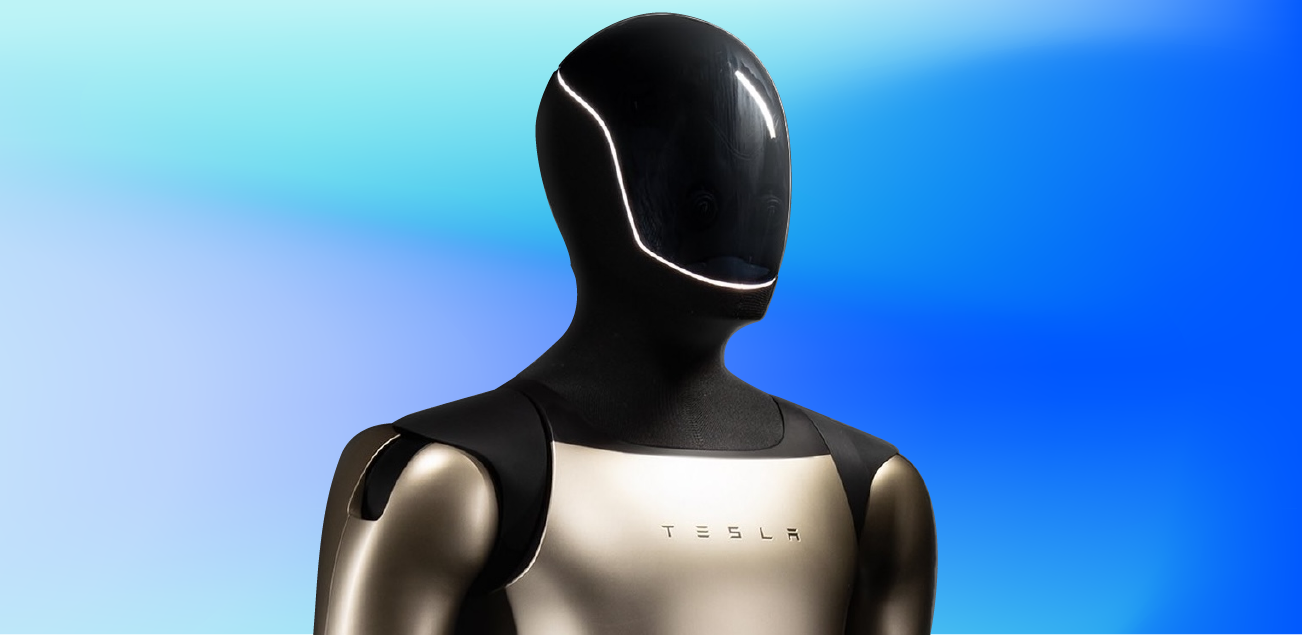
Tesla Optimus Gen 2 robots are performing real production tasks inside Tesla's Fremont and Austin factories: battery cell sorting, parts handling, and quality inspection. These are not demonstrations. They are live factory operations. Tesla confirmed in its Q1 2026 earnings call that Gen 2 is deployed internally and performing useful work.
Optimus Gen 3 is the version entering production. It features 37 joints, up from 28 in Gen 2, with harmonic and planetary drive systems enabling walking speeds of 1.2 meters per second and stable operation on 15-degree slopes. The Gen 3 hands have 50 actuators, a 4.5x increase in dexterity from Gen 2. The robot is powered by Tesla's AI5 inference chip, delivering approximately 5x the compute of AI4.
Tesla is converting its Fremont factory from Model S/X production to Optimus manufacturing. Production begins in late July or August 2026. The Fremont line is designed for 1 million units per year capacity. A second factory at Giga Texas targets 10 million units annually with production beginning in summer 2027. External sales to enterprise customers are expected in late 2026 at approximately $25,000 to $40,000 per unit.
Tesla trains Optimus using the same AI infrastructure built for Full Self-Driving: large-scale video data, neural network training on Tesla's Dojo supercomputer and now Cortex 2.0, and reinforcement learning in simulation. The Digital Optimus initiative pairs physical robots with Grok-based AI for office and clerical tasks. Tesla's data advantage from its vehicle fleet translates directly to robotics training.
Boston Dynamics retired the hydraulic Atlas in April 2024 after 11 years of research demonstrations. The electric Atlas, unveiled in April 2024, is a ground-up redesign built for industrial deployment rather than research. The electric Atlas is stronger than the hydraulic version, with a greater range of motion and industrial-grade durability designed for real factory environments.
Boston Dynamics and Hyundai are targeting automotive manufacturing as the primary initial deployment environment. Atlas is already working in Hyundai facilities in limited pilot deployment, performing tasks in the manufacturing environment alongside human workers.
Boston Dynamics has not announced mass production timelines or pricing for Atlas comparable to Tesla's public commitments. The company is taking a more measured approach, focusing on validating performance in controlled industrial pilots before scaling. This is consistent with Boston Dynamics' historically research-first methodology, though the electric Atlas represents a clear pivot toward commercial deployment.
Spot, Boston Dynamics' quadruped AMR, is commercially available and widely deployed for industrial inspection, security patrol, and construction monitoring. The commercial experience with Spot informs the Atlas commercialization strategy.
Boston Dynamics uses a combination of model predictive control, reinforcement learning, and whole-body control algorithms developed over more than a decade of Atlas research. The electric Atlas benefits from this research heritage, particularly in locomotion and balance, where Atlas has historically led the industry. The AI stack is proprietary and deeply integrated with the hardware.
Locomotion and balance: Boston Dynamics Atlas. A decade of research produces superior movement quality. Atlas moves with a fluidity that no other humanoid has matched.
Production scale and timeline: Tesla Optimus. No other company has announced production timelines, factory capacity, or volume targets comparable to Tesla's public commitments.
AI and data infrastructure: Tesla Optimus. Tesla's existing AI infrastructure for Full Self-Driving is the most mature in the industry for real-world visual AI. This translates directly to robotics.
Industrial deployment experience: Roughly equal. Both have limited real-world industrial deployments. Tesla has more units deployed internally; Boston Dynamics has more external customer relationships through Spot.
Pricing and accessibility: Tesla Optimus leads on stated targets. Musk has committed to sub-$25,000 pricing at scale. Boston Dynamics has not published Atlas pricing.
Commercial availability: Neither is generally available to operators outside of direct enterprise agreements. Tesla targets late 2026 for initial external sales. Boston Dynamics has not committed to a public availability date for Atlas.
If you are an investor or industry analyst, both matter. Tesla represents the highest-volume bet; Boston Dynamics represents the deepest technical pedigree.
If you are an industrial operator evaluating automation decisions, the honest answer in May 2026 is that neither robot is available for general deployment. The simulation-first methodology that both robots depend on for training and validation is available now and is what forward-looking operators are building capability around today.
The robots will become available. The operators who have built the deployment infrastructure and methodology will be ready to absorb them efficiently when they do. Those who wait for the hardware to arrive before thinking about deployment will be 12 to 24 months behind.