
The number that matters is not 350. It is the rate change behind it.
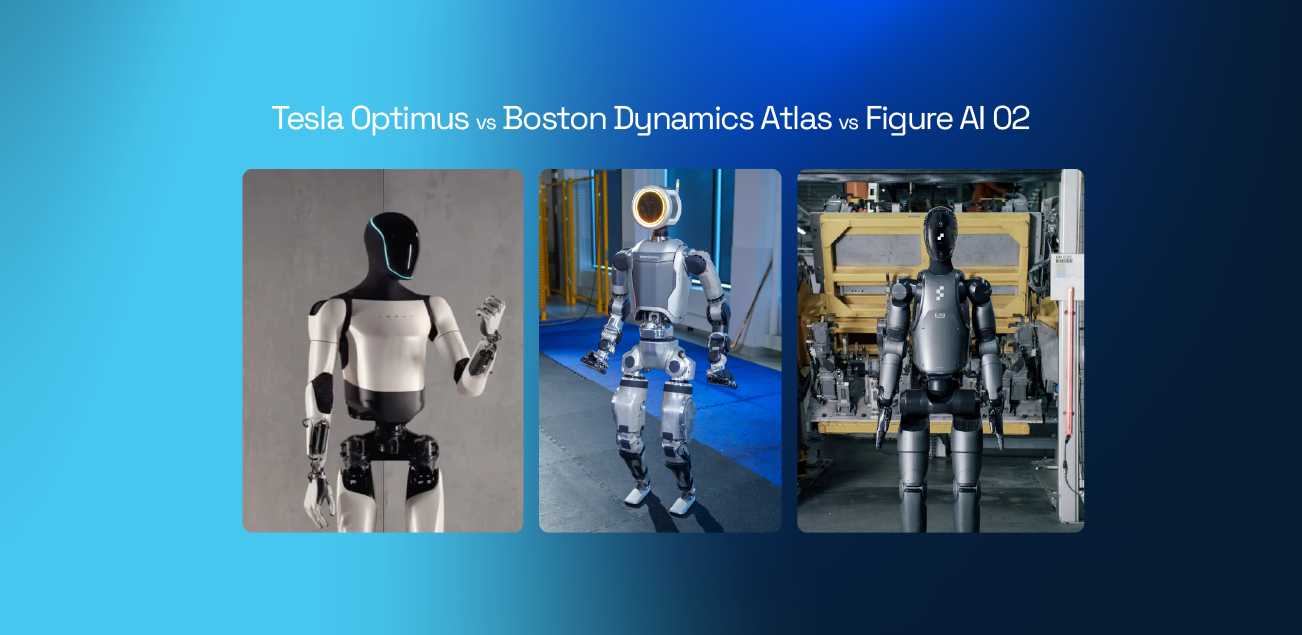
In late April 2026, Figure AI announced it had increased production of its Figure 03 humanoid robot from one unit per day to one unit per hour. That is a 24x acceleration in manufacturing velocity, achieved in less than four months. Over 350 third-generation humanoids have now been produced. At one per hour, sustained over a full year, the output exceeds 8,700 robots from a single production line.
I want to be precise about what this tells us and what it does not. Because the implications for warehouse and manufacturing operators are different depending on which question you are actually asking.
Demo videos are not informative about manufacturing maturity. Every major humanoid robot company has produced compelling footage. What footage does not tell you is whether the robot can be manufactured consistently, whether the AI system generalizes beyond the demo environment, and whether the company has solved the supply chain, quality control, and assembly repeatability problems that turn a prototype into a product.
Production velocity answers those questions. A company building one robot per hour has solved a specific and difficult set of engineering problems: component sourcing at scale, assembly line repeatability, quality inspection at volume, and feedback loops that identify and fix manufacturing defects before they propagate across hundreds of units. These are not software problems. They are manufacturing problems. They require a different kind of organizational capability than building impressive demos.
Figure AI going from one per day to one per hour is significant not because of the number it produces. It is significant because of what it reveals about the organization's manufacturing maturity.
Figure 03 is deployed at BMW's Spartanburg factory in South Carolina, performing material handling in a live production environment alongside human workers. This is not a pilot in a controlled section of the facility. It is an integration into an active manufacturing line that BMW has publicly backed.
The robot runs Figure's Helix vision-language-action model, trained through simulation, imitation learning from teleoperation data, and reinforcement learning. The company demonstrated 24-hour fully autonomous operation without human supervision in real-world conditions. The overnight runs validate that the AI system does not degrade over an extended operational period without reset or recalibration.
Figure also introduced perception-conditioned whole-body control trained in simulation and transferred directly to physical robots without additional real-world tuning. Sim-to-real transfer without post-training is the benchmark the entire industry is working toward. Figure is demonstrating it in a production deployment, not a lab setting.
What makes Figure's production ramp possible is not just manufacturing. It is the training pipeline behind the manufacturing. You can build robots faster when your AI training is not bottlenecked by physical hardware availability. Simulation generates training data at a rate that real-world teleoperation cannot match.
Figure's Helix model is trained on NVIDIA GPU infrastructure with large-scale synthetic data generation. The sim-to-real transfer capability they demonstrated is the same methodology that NVIDIA's Isaac Sim platform enables. At Helpforce AI, we run this same simulation-first pipeline for warehouse and security deployments. The difference in scale between our deployments and Figure's BMW integration is real. The methodology is identical.
Figure 03 is not available for general purchase. The BMW deployment is an enterprise partnership. If you are an operator in logistics, manufacturing, or security evaluating automation decisions right now, Figure 03 is not a near-term option for your facility.
Neither is Tesla Optimus, which begins limited external sales in late 2026 at best. The humanoid robots reaching general commercial availability at scale are 12 to 24 months away from most operators outside direct enterprise agreements.
What is available today is the deployment infrastructure. The simulation stack. The digital twin methodology. The training pipelines. The hardware price curve is falling, which means the question of when to deploy is becoming less about cost and more about readiness.
The operators who will lead in automated operations in 2028 are not the ones who buy robots in 2028. They are the ones building the deployment capability right now: the facility mapping infrastructure, the digital twin library, the process integration experience. When Figure 03 or Optimus Gen 3 becomes available at commercial scale, operators with existing simulation infrastructure and deployment experience will absorb and optimize that hardware in weeks. Operators starting from zero will take months.
One robot per hour from Figure AI is a signal. The question is what you do with it.