
Pakistan warehouse automation 2026
A research report on the automation opportunity across Pakistan's warehousing, manufacturing, and security sectors — and what is now available to close it.


Pakistan's industrial sector is at an inflection point. Manufacturing accounts for 13% of national GDP and employs millions across textiles, food processing, chemicals, and logistics. E-commerce transaction value has grown 1,400% between FY2019 and FY2024. CPEC is driving new industrial corridors and warehousing demand across Karachi, Lahore, and Faisalabad.
And yet, the workforce running these operations remains almost entirely manual, informal, and increasingly unsustainable. Of 24 million people in manufacturing-adjacent roles, only 49,000 are formally trained in technical skills — less than 0.2% of the relevant workforce. Over 85% of employment is informal, meaning no contracts, no structured training, no institutional continuity.
The gap between what Pakistan's industrial facilities need to compete and what they currently operate on is widening. This report examines that gap — and what is now available to close it.
01 — Pakistan's e-commerce market grew 1,400% in five years. Warehousing infrastructure has not kept pace with demand.
02 — 85% of Pakistan's industrial workforce is informal, creating structural training and retention challenges that manual hiring cannot solve.
03 — Security guard turnover globally runs 32–40% annually. Pakistan's informal labor market makes this figure higher, not lower.
04 — Automation deployment costs have dropped significantly. Mid-market Pakistani operators can now access enterprise-grade robotics infrastructure without enterprise timelines or budgets.
Pakistan's workforce is projected to exceed 100 million by 2025. But quantity is not the problem. Of 24 million people in manufacturing-adjacent roles, only 49,000 are formally trained in technical skills — less than 0.2% of the relevant workforce. Over 85% of employment across all sectors is informal, meaning no contracts, no structured training, no institutional continuity.
The consequences show up on the factory floor every day: high turnover, inconsistent output, quality control failures, and a throughput ceiling that cannot be broken by adding more people. The World Bank has noted that low productivity across all sectors has constrained income growth — and manufacturing is no exception.
For warehouse operators specifically, the challenge is compounding. Labor accounts for 55–70% of warehouse operating budgets globally. As e-commerce demand accelerates — the sector is growing at 17% CAGR and is projected to reach $12 billion by 2027 — the pressure on warehouse operations is increasing faster than manual labor can absorb it.
Key data points:
Pakistan's private security sector operates almost entirely on manned guarding. Guards are deployed at factories, warehouses, commercial buildings, and industrial campuses across every major city. The model is familiar, trusted by default, and fundamentally broken.
Globally, security guard workforce turnover averages 32–40% annually — Pakistan's informal labor market makes this figure higher, not lower. The hidden costs of this turnover — constant recruitment, retraining, inconsistent coverage, undocumented incidents — rarely appear on a security budget but accumulate silently every year.
The operational gaps are structural: shift changes create coverage windows, fatigue degrades performance after hours, blind spots go unmonitored, and incident documentation is often incomplete or absent. When something goes wrong, the paper trail is usually the first casualty.
Globally, demand for automated and unmanned security systems is growing at 10.1% CAGR. In Pakistan, the adoption curve has barely begun. The facilities that move first gain a permanent operational advantage — not just in cost, but in documented, defensible security infrastructure.
Key data points:
The structural case for autonomous security in Pakistan's industrial sector
Pakistan's warehousing sector is entering a period of accelerated demand. CPEC industrial corridors are creating new storage and logistics requirements across Rashakai, Dhabeji, and Gwadar. E-commerce fulfillment is driving modern warehousing facility development in Karachi and Lahore. Multinational logistics providers are already reporting strong growth in contract logistics revenue across the region.
The opportunity is real. The infrastructure gap is equally real.
Globally, warehouse robotics is a $6.1 billion market growing to $10.5 billion by 2030 at 11.4% CAGR. Autonomous Mobile Robots deliver 2–3x productivity gains over manual workflows. DHL reported 100%+ pick rate improvements after AMR deployment. Amazon achieved 4x throughput on the same headcount. These are operational results from facilities that look structurally similar to Pakistan's growing logistics sector.
The barrier to entry for Pakistani operators has never been lower. The simulation-first deployment methodology makes it possible to train and deploy warehouse robots without months of on-site disruption — and without the enterprise-scale budget that automation used to require.
Key data points:
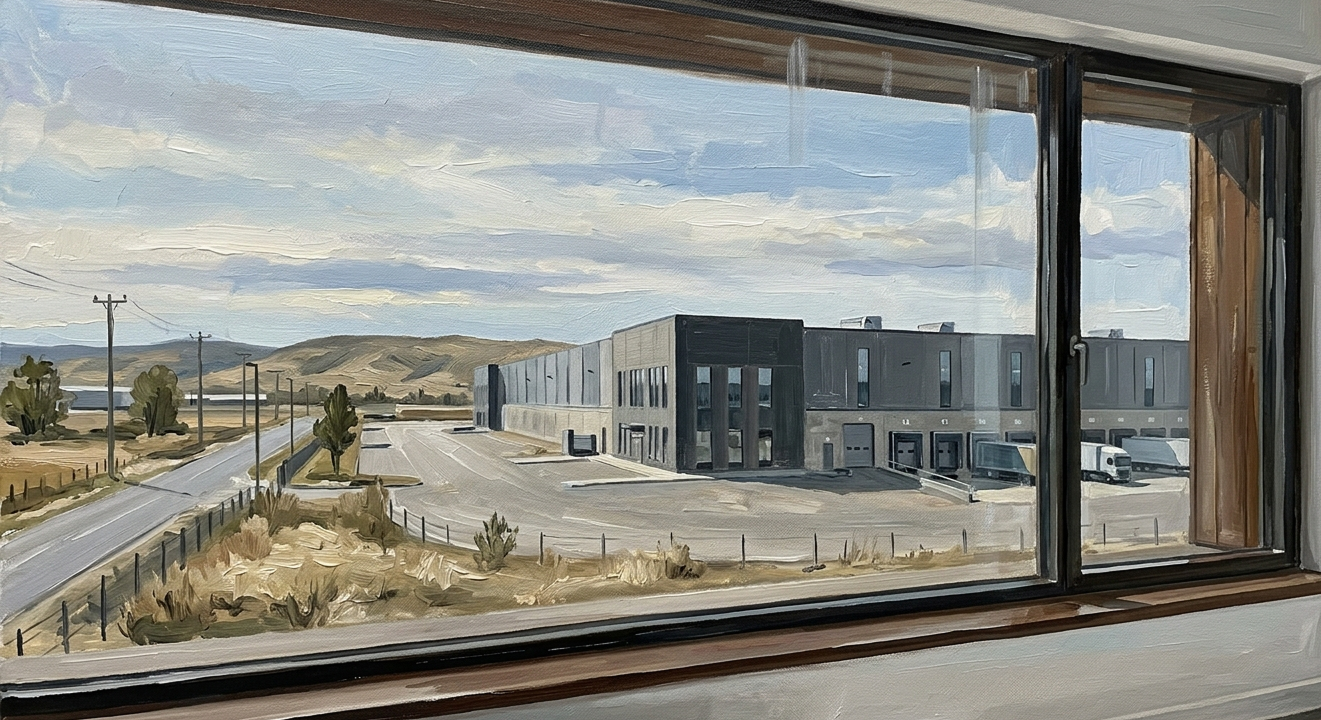
The convergence of three forces makes 2026 the defining year for Pakistani industrial operators to act.
Cost pressure is accelerating. Energy costs have risen sharply. Labor wages are moving upward. Operational margins are thinning. Manual operations that were viable three years ago are becoming structurally unprofitable.
Technology access has democratized. The platforms running BMW's factories and Amazon's warehouses are now accessible to mid-market Pakistani operators through simulation-first deployment. You no longer need a $50 million automation budget to deploy enterprise-grade robotics infrastructure.
The competitive gap is opening. Pakistani manufacturers and logistics operators who automate now will be operating at a permanently different cost and quality baseline than those who wait. The gap compounds annually. The advantage of moving first is not temporary.
Pakistan's Large Scale Manufacturing sector grew 4.82% in the first half of FY2026. The next phase of growth will not come from adding more manual labor. It will come from the operators who understand that the workforce model powering the last decade cannot power the next one.
Key data points:
Deploying robots in a Pakistani industrial facility does not require a foreign vendor, a 12-month implementation timeline, or an open-ended budget.
The simulation-first methodology changes the deployment model entirely. Your facility is scanned and modeled digitally. The robot trains in that virtual environment — thousands of scenarios, your specific layout, your specific operations — before any hardware arrives. Day one is operational, not experimental.
For warehouse operators: autonomous picking, route optimization, inventory monitoring, and 24/7 throughput without the turnover, training cycles, and human error that define manual operations.
For security and facilities managers: autonomous patrol trained on your building's exact floor plan, entry points, and protocols. Consistent coverage across every shift, every hour, with full incident documentation.
Both deployed on proven infrastructure. Both configured for your specific facility. Both starting with a 30-minute conversation.
Key data points:

Pakistan Bureau of Statistics 2024–2026 · World Bank Pakistan Development Update October 2025 · ILO World Employment and Social Outlook 2025 · ABI Research Global Robotics Market Q3 2025 · Grand View Research Industrial Robotics 2024 · MarketsandMarkets Warehouse Robotics 2023 · Future Market Insights Private Security Market 2025 · MindInventory Digital Twin ROI 2026 · Simio Digital Twin Deployment Study 2026 · McKinsey Global Institute · Akademos Pakistan E-Commerce Report 2025 · DHL Pakistan Logistics Insights · Pakistan e-Commerce Policy 2.0 2025 · Crunchbase Robotics Funding H1 2025
All data attributed to third-party sources. Published for informational purposes only. © 2026 Helpforce AI, operated by Vetta Ventures. All rights reserved.