
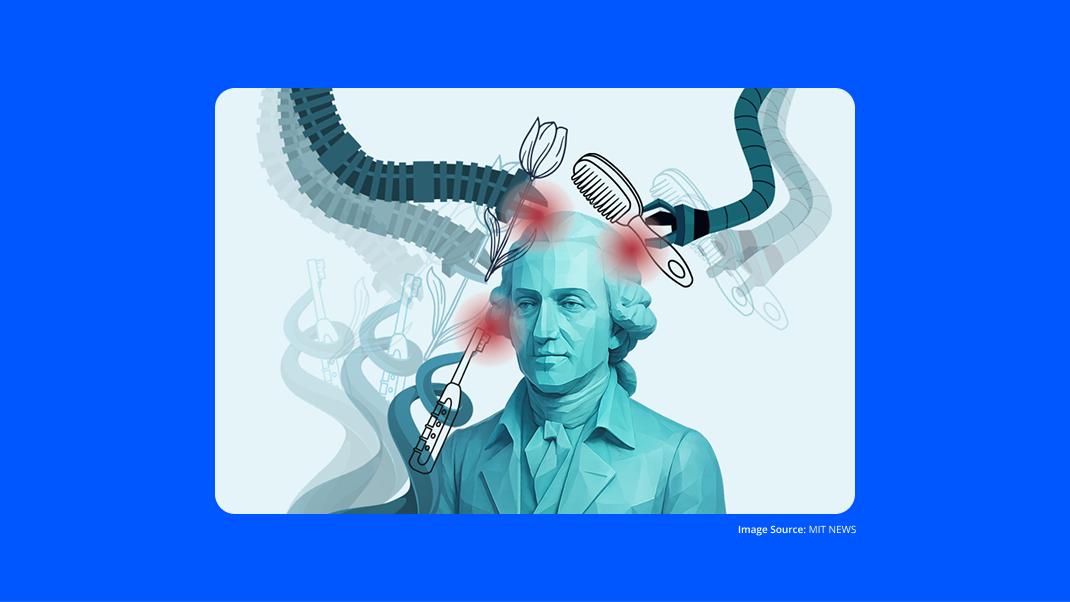
A groundbreaking development from MIT's Computer Science and Artificial Intelligence Laboratory (CSAIL) and Laboratory for Information and Decision Systems (LIDS) has solved one of robotics' most persistent challenges: how to create robots that can safely deform, adapt, and physically interact with humans and objects without risking injury or damage.
The Safety Challenge in Soft Robotics
Traditional rigid robots have well-defined boundaries and predictable movements, making safety protocols relatively straightforward. However, the next generation of robots—soft, flexible machines capable of working alongside humans in unstructured environments—presents unique safety challenges. How do you ensure a robot that can bend, stretch, and deform maintains safe operation when its shape and configuration are constantly changing?
MIT's Mathematical Solution
MIT researchers have developed a mathematically grounded system that provides formal safety guarantees for soft robots operating in dynamic, human-occupied spaces. The breakthrough lies in creating control systems that account for the continuous deformability of soft robots while maintaining strict safety boundaries.
The system uses advanced control barrier functions adapted specifically for soft robotics. Unlike rigid robots where safety zones can be defined around fixed points and joints, soft robots require dynamic safety boundaries that adjust as the robot's shape changes. MIT's approach creates mathematical "safety envelopes" that expand and contract with the robot's movements, ensuring no part of the deforming structure violates defined safety limits.
Real-World Applications
This breakthrough has immediate implications for numerous applications where robots must safely interact with humans:
Healthcare and Rehabilitation: Soft robots assisting with patient mobility, physical therapy, and elder care can now operate with mathematical certainty that they won't apply excessive force or move into dangerous configurations, even when lifting or supporting unpredictable human movements.
Manufacturing and Warehousing: Collaborative robots working alongside human workers can safely handle irregular objects, adapt to changing work environments, and respond to human presence without rigid safety cages or extensive sensor arrays.
Search and Rescue: Soft robots navigating disaster sites can squeeze through tight spaces, climb over obstacles, and interact with survivors while maintaining safety guarantees—critical when operating in unpredictable, high-stakes environments.
Home Assistance: The ultimate goal of home robotics requires machines that can safely operate in spaces designed for humans, with children, pets, and elderly family members present. Soft robots with formal safety guarantees make this vision dramatically more feasible.
Technical Innovation
The MIT system represents several key innovations. First, it extends control barrier function theory—previously developed for rigid systems—to handle continuous deformation. This required developing new mathematical frameworks that can compute safety boundaries for systems with infinite degrees of freedom (unlike rigid robots with discrete joints).
Second, the system operates in real-time, computing safe control actions fast enough for practical robot operation. This computational efficiency is critical—mathematical safety guarantees are useless if calculations take too long for the robot to respond to changing conditions.
Third, the approach is modular and adaptable, allowing different soft robot designs to implement the safety framework without custom engineering for each platform. This accelerates development and deployment across the rapidly growing soft robotics field.
Why This Matters Now
Soft robotics is experiencing explosive growth driven by advances in materials science, additive manufacturing, and AI control systems. Market analysts project the soft robotics market to grow from $1.8B in 2024 to $10.4B by 2032. However, safety concerns have limited deployment in human-occupied environments—the very spaces where soft robots offer the greatest advantages.
MIT's breakthrough removes a critical barrier to adoption. Formal safety guarantees provide the confidence needed for regulatory approval, insurance coverage, and public acceptance of soft robots operating in homes, hospitals, and workplaces.
The Path Forward
This research positions MIT and its collaborators at the forefront of the next robotics revolution. As soft robots transition from laboratory curiosities to practical tools, the institutions and companies that solve the safety challenge will dominate this emerging market.
For the Middle East, where ambitious smart city projects like NEOM and Dubai 2040 envision robots integrated throughout urban infrastructure, soft robotics with formal safety guarantees offers exciting possibilities—from elder care in aging populations to assistance in extreme heat environments where flexible, adaptive robots excel.
MIT's breakthrough doesn't just advance robotics technology—it opens entirely new application domains where robots can safely serve humanity in ways previously impossible.